
Handling Kitchen ‘Unexpecteds’

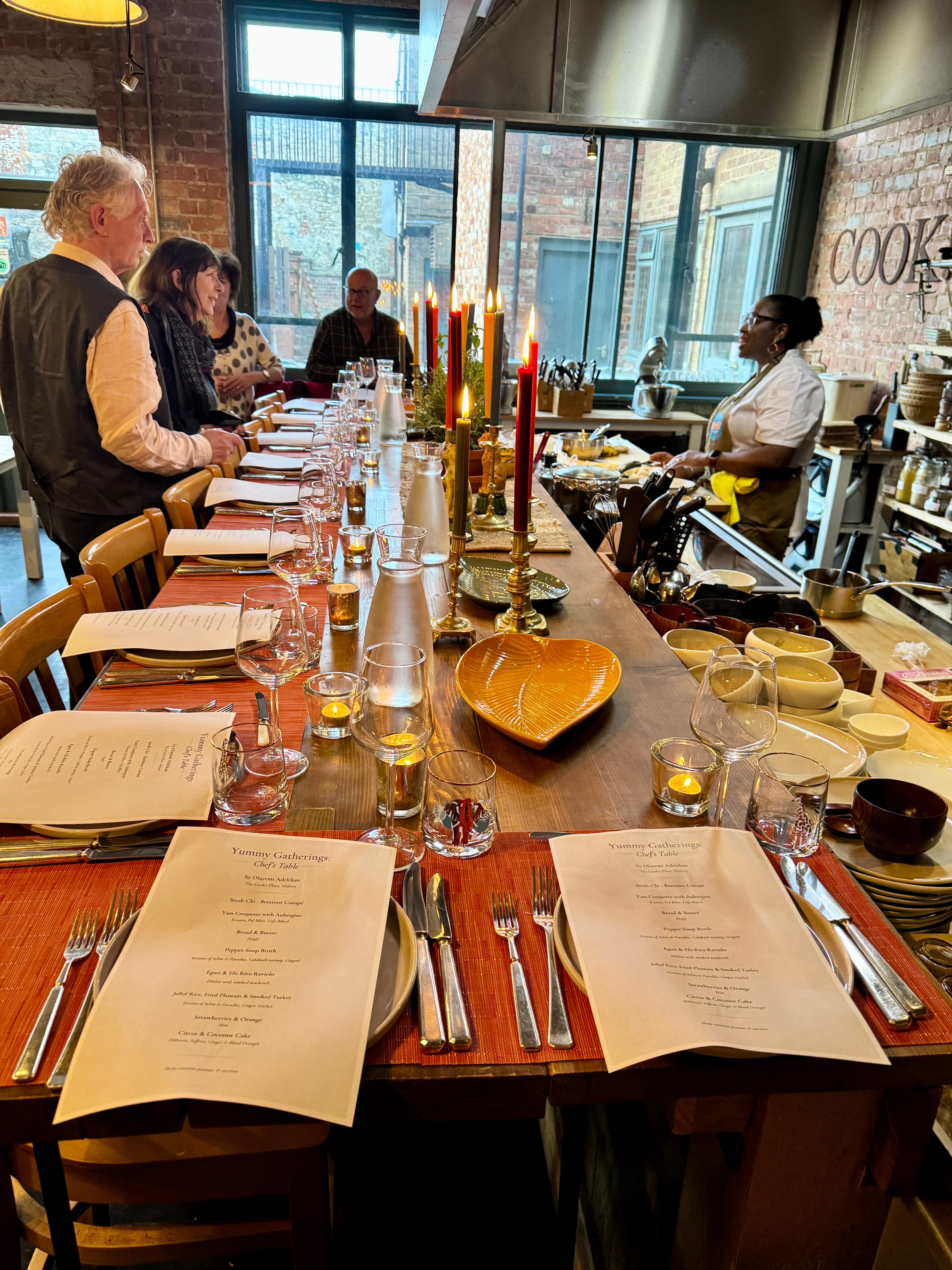
This week has been about the unexpected with a few twists and turns. Ahead of my Chef’s table event at The Cook’s Place in Malton, I was supposed to have a new induction stove delivered two days before. I got a call that delivery needed to be rescheduled due to illness with a proposed delivery of Saturday which I kindly declined as I wasn’t willing to take any chances on the day of my event.
Firstly my cooking would be interrupted and it could be at a critical time knowing that I needed to bake four different elements – 2 types of bread, a cake and tuile for dessert. Also I would need to get used to the heat settings for the induction oven so the whole thing was screaming ‘risky’.
As a home cook and chef, handling unexpected is a hazard of the job and you need to be able to pivot without panic. I once had to do a chef demo at an event in the middle of the fields with uneven grounds. The induction stove was tilted which meant the pots were sliding off the surface losing contact with the heat turning off. I had to be super vigilant to ensure my dishes were cooked whilst engaging with the compère and the audience.
Another time, I forgot the oil that I needed for my dish which was a potential disaster considering I was making a fried Nigerian snack called puff-puff. I went into problem solving mode and ended up getting some oil from a food truck vendor; this was the start of a beautiful friendship and now the vendor makes me lunch at every event we feature at together.
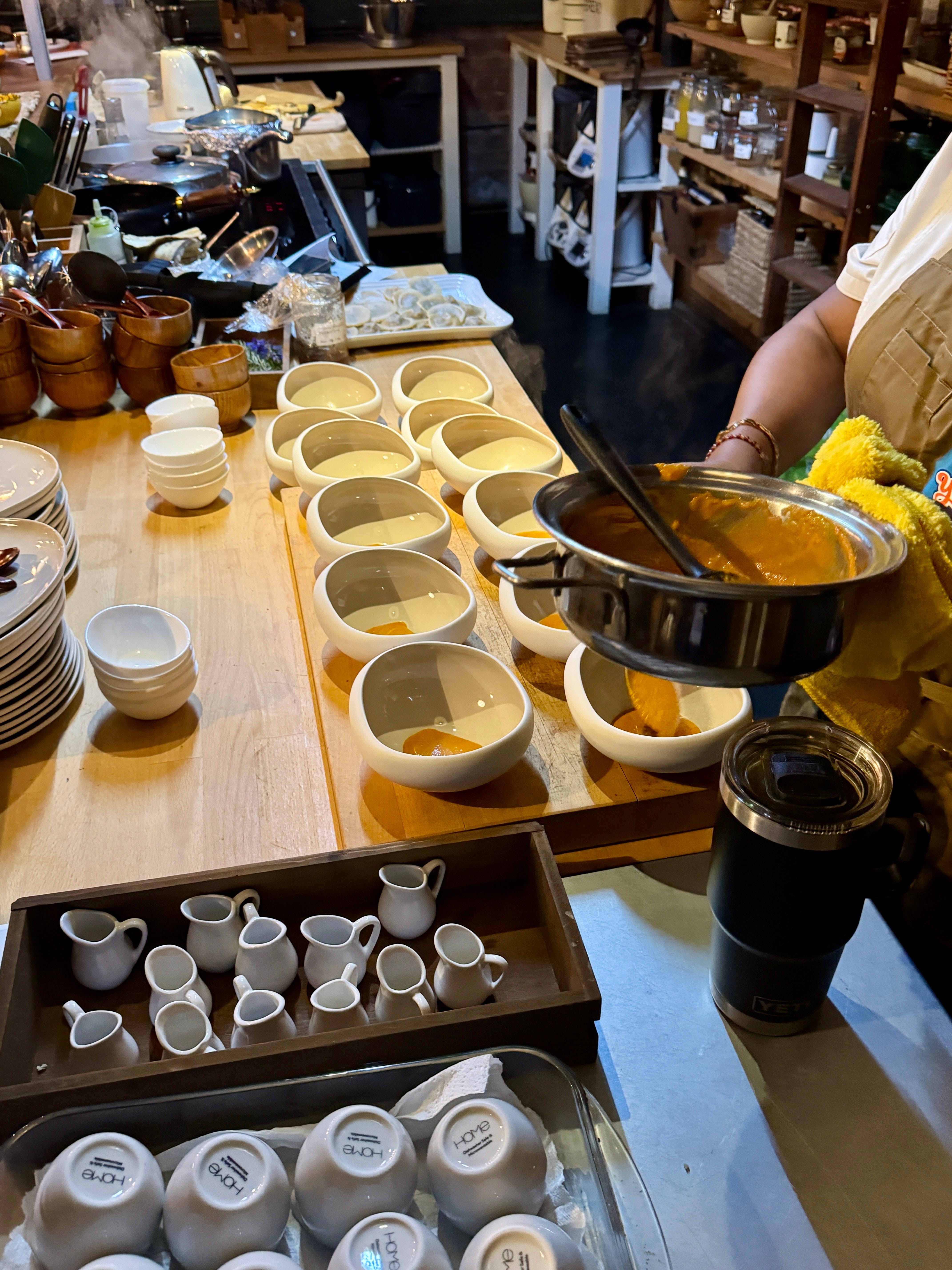
One of the dishes on my Chef’s table menu was Jollof rice, plantain and a smoked turkey sauce. This is something I cook on the lowest heat setting on my home stove for a set time and always guaranteed a fluffy result but the low setting on their induction stove did not deliver the expected results. I needed to problem solve and add more water to quickly cook the rice; thankfully I was still frying plantains when I discovered this so had time to resolve the issue.
Like a pro who has handled many potential kitchen disasters, I held fear and panic back and focused on what I needed to do to get the result I wanted; I also sent a little prayer for help upwards. Thankfully the rice turned out as expected with guests asking for second helpings.
One thing that chefs and home cooks have to deal with to varying degrees is the unexpected which can range from someone not showing up for their shift, realising a missing element at the last minute or dropping a jar of a key ingredient. These scenarios can either send us into a tailspin or give us an opportunity to shine.

There are loads of chefs today who were thrown into the deep end because someone did not show up and they were asked by the chef to leave pot washing and join the line; others stumbled into pastry work because the pastry chef didn’t make it in discovering a love for pastry work along the way.
The one thing we all need to address at such times is panic, fear and self-doubt and we can do this by first acknowledging there is a solution to every problem starting with owning up to the truth when something goes wrong, asking for help or letting someone more experienced know there’s an issue and problem solving it together.
I once spoke to a young trainee chef friend and asked him what he would do if their pastry chef didn’t show up and his head chef put him on the dessert station. From his response, I saw that it would be his worst nightmare so we spent the day learning about base elements – crumbs, ice cream, tuile, soil, mousse, shortbread, compotes, fruit purées, curd – and created a simple list of desserts like a lemon posset and panna cotta with different flavours.
To combat a potential disaster, we role played what would happen if he was dropped into any kitchen section and armed him with tools to handle it starting with how to create simple desserts from base elements.
When kitchen disasters happen at home, we feel better in control because the stakes aren’t too high especially if we are only cooking from friends and family but this shouldn’t really change when it happens in other settings.
My main tip is to hold your nerve and think clearly and rationally; ask what problem you need to solve and explore alternative solutions. Make a decision and start implementation without losing sweat. Trust yourself and have your own back because the alternative won’t change or help you resolve the issue.
Guests and diners don’t always fully know what to expect so you can swap an element and even if they know what to expect, you simply explain and you will be pleasantly surprised that most people are understanding and appreciative of your efforts to give them a great dining experience.
Finally understanding the characteristics and properties of ingredients is a good armour to have; it helps you to know you can swap sumac for lemon in a recipe, chick pea liquid for eggs, Tonka bean for vanilla or use a hot coal topped with oil and spices to bring in smoke when the smoke gun suddenly packs up. The kitchen is your laboratory so allow your creativity to shine.
I will share my chef’s table dishes in my next post.